
PBG 3 Question interview: Seema Farswani’s single “Evolved”

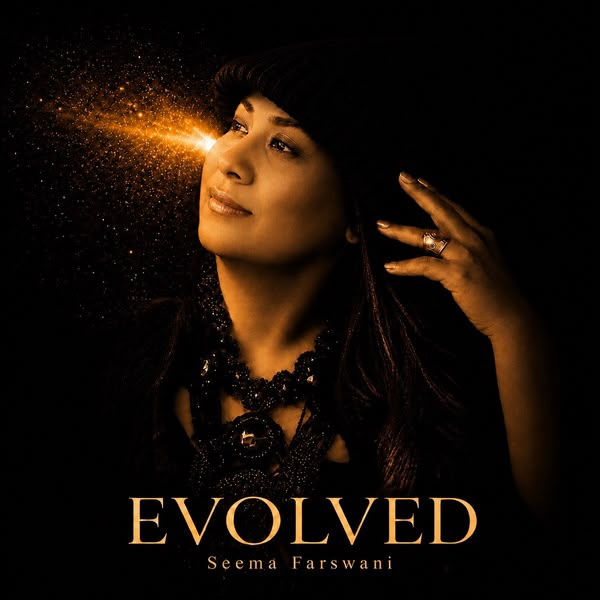
Seema Farswani’s single “Evolved” is a raw and atmospheric pop-rock track that captures the powerful moment when someone starts to become a new version of themselves. Seema, who lives in Singapore and has spent time in Dubai, Chicago, and other places, mixes music, design, culture, and visual storytelling in her work. Her sound blends rock, pop, blues, soul, and global fusion. The song features intimate vocals, expressive guitars, layered production, and French phrases like “Je suis vivante” and “Je suis déchirée.” It holds the tension of feeling alive, torn, vulnerable, and strong all at once. Made with Rish at Level Music Mumbai and a thoughtful UK team, “Evolved” shows that growth is not always polished or easy, but is a deeply human process shaped by love, distance, uncertainty, resilience, and quiet change.

1. “Evolved” seems to breathe in that delicate space between who we once were and who we’re becoming, where growth isn’t always bold or dramatic but instead feels gentle, raw, and deeply real. Can you share what chapter of your life inspired this song, and what new truths about yourself came to light during the writing process?
I would describe it as a reflection of the era we are living in—one where relationships, identities and priorities seem to be shifting constantly. I found myself observing how people change, how connections evolve, and how growth can quietly reshape the way we see ourselves and one another.
That space between holding on and moving forward became the emotional starting point for Evolved. The song was written not from one single event, but from watching these changes unfold around me and recognising how universal that experience has become.
One of the truths that emerged through the writing was that growth does not always arrive as a dramatic breakthrough. Sometimes it happens quietly—through the choices we make, the boundaries we learn to hold, and the parts of ourselves we gradually stop apologising for.
Evolved is for anyone standing at that threshold between the familiar and the person they are slowly becoming.
2. The way you weave in the French phrases “Je suis vivante” and “Je suis déchirée” adds a beautiful, poetic tension to the song, capturing what it means to feel both alive and torn all at once. What made it important for you to let those two emotions sit side by side, instead of smoothing things over or making the transformation sound easy?
The French phrases came from the idea that two seemingly opposite emotions can exist within us at exactly the same time.
“Je suis vivante” means “I am alive,” while “Je suis déchirée” means “I am torn.” To me, that contrast is the emotional heart of Evolved. Change can make us feel more awake and connected to ourselves, while also leaving us uncertain, vulnerable or divided between what we are leaving behind and where we are going.
I did not want the song to present transformation as effortless or perfectly resolved, because real growth is rarely that simple. We can feel strong and fragile, liberated and unsettled, alive and torn—all within the same chapter.
French gave those emotions a poetic quality. The phrases do not explain everything; they create a feeling and allow listeners to bring their own experiences into that space.

3. You have such a unique perspective as both a musician and an interior designer, and it really feels like you bring a sense of space, texture, and movement into your music. How does your visual creativity shape the way you build a song like “Evolved,” especially when you’re aiming for something that feels cinematic, intimate, and emotionally powerful?
My worlds as a designer and musician are deeply connected. In design, I think about space, texture, light, contrast and the way someone moves through an environment. I approach music in a very similar way.
When I was shaping Evolved, I could visualize the song before I could hear its final form. I imagined someone moving through a dark, uncertain space, gradually stepping towards light and clarity. That visual journey influenced the dynamics, emotional pacing and the way the production needed to expand.
I think of instruments as textures and vocals as light and shadow. Some moments need space and restraint, while others need greater weight, colour or movement. I brought the sonic references, emotional arc and overall vision to the production process, and the creative team helped develop those ideas into the final recording.
For me, creating a song is much like designing a room or telling a visual story: every element must have a purpose, while leaving enough space for the listener to enter and experience it in their own way.
Connect with Seema Farswani


Comments